
What to Expect During a Home Care Assessment: A Guide for Families
Every family situation is different, but a home care assessment generally looks at several areas of daily life.
- Daily Routines and PreferencesThe assessment should consider how your loved one normally spends the day.
This can include their usual wake-up time, meals, hobbies, social activities, preferred routines, and the things they want to continue doing independently.
Understanding these details helps keep care personal rather than treating support as a simple list of tasks.
2. Personal Care
Families may discuss whether assistance is needed with activities such as:
- Bathing
- Dressing
- Grooming
- Toileting
- Personal hygiene
- Getting ready for the day
For many older adults, maintaining privacy and independence during personal care is just as important as completing the task itself.
The goal is to understand where support is actually needed while preserving as much independence as possible.
3. Mobility and Fall Concerns
Mobility is another important part of a senior care assessment.
Families may discuss difficulty walking, transferring, using stairs, getting in and out of a chair, or previous falls and near-falls.
These conversations can help identify situations where additional supervision or assistance may be useful.
Example: How an Assessment Can Inform a Care Plan
What Is a Home Care Assessment?
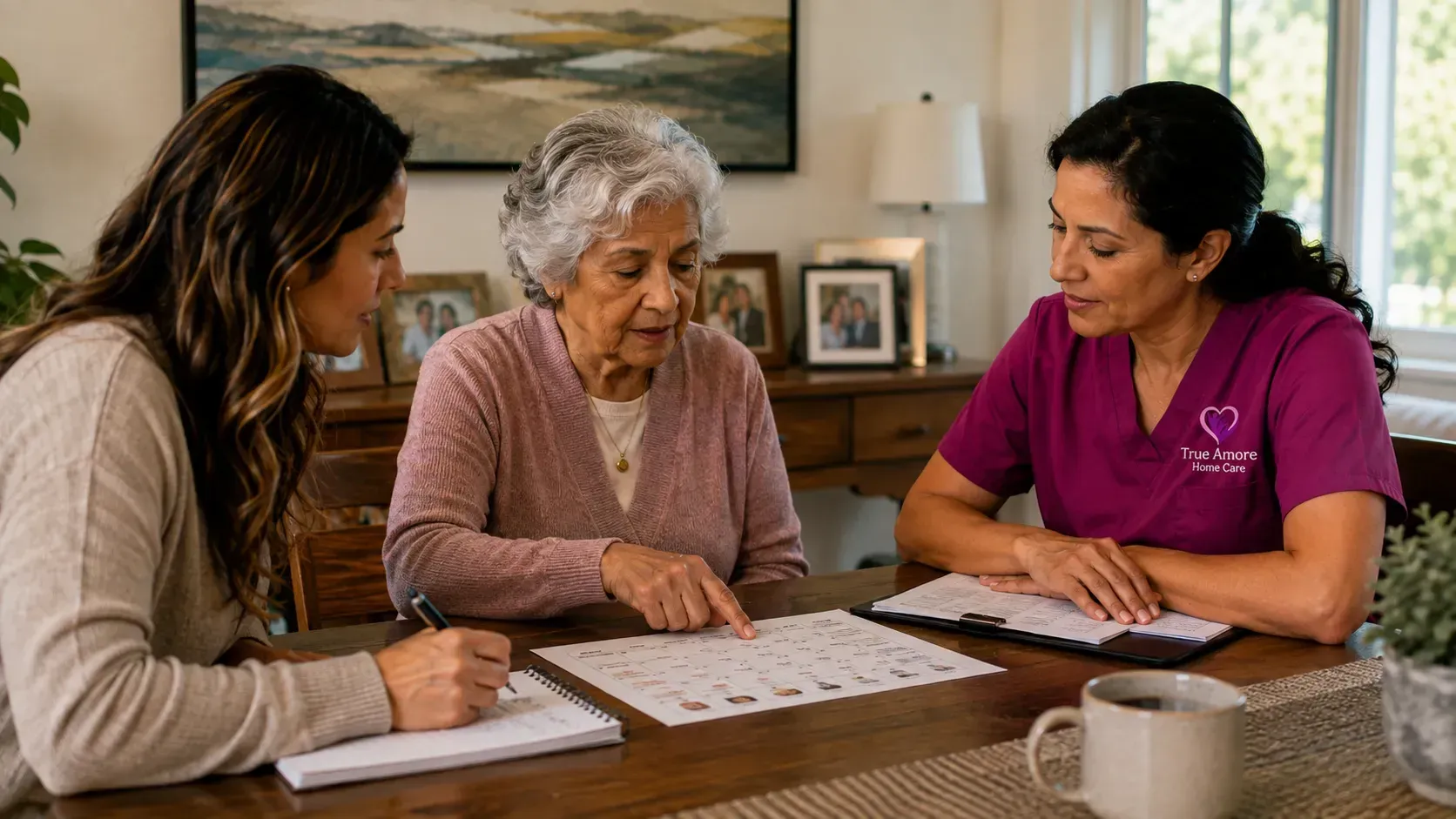
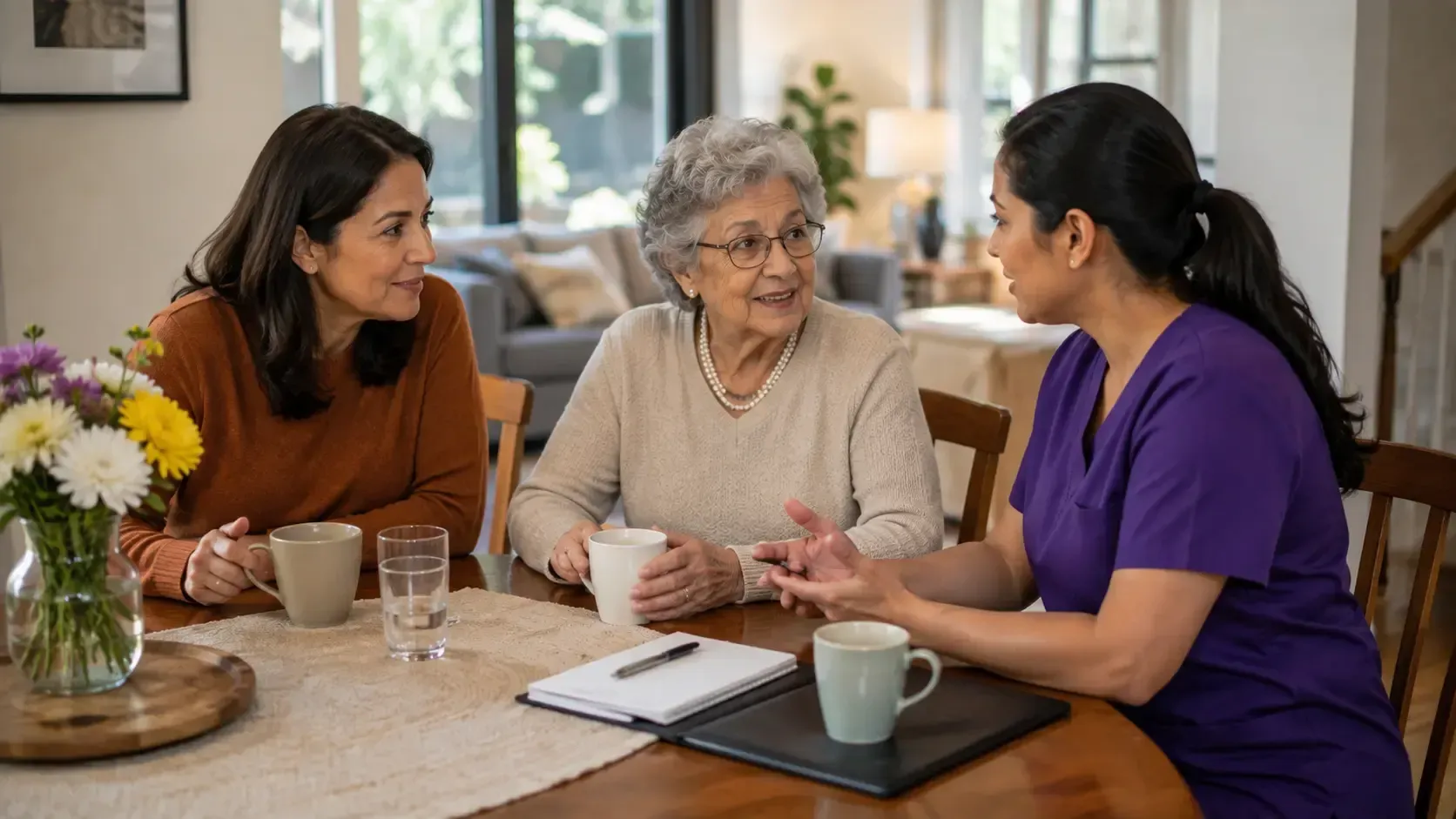
A home care assessment is a conversation between a family and a home care provider to understand an older adult's daily routines, preferences, challenges, safety concerns, and areas where support may be helpful. Families can expect to discuss personal care, mobility, meals, memory, medication reminders, transportation, companionship, and the amount of assistance needed at home. By the end of the assessment, the goal is to have a clearer understanding of the person's care needs and the type of support that may fit their routine.
Why Is a Home Care Assessment Important?
Families often know that a parent needs some help but aren't sure what kind of help or how much support is appropriate.
An assessment gives the family an opportunity to look beyond individual tasks and consider the older adult's entire daily routine. For example, someone may still be able to prepare breakfast independently but struggle with bathing, transportation, medication reminders, or getting around safely.
A good assessment should help identify those gaps without assuming that every senior needs the same level of care.
What Happens During a Home Care Assessment?
Every family situation is different, but a home care assessment generally looks at several areas of daily life.
1. Daily Routines and Preferences
The assessment should consider how your loved one normally spends the day.
This can include their usual wake-up time, meals, hobbies, social activities, preferred routines, and the things they want to continue doing independently.
Understanding these details helps keep care personal rather than treating support as a simple list of tasks.
2. Personal Care
Families may discuss whether assistance is needed with activities such as:
- Bathing
- Dressing
- Grooming
- Toileting
- Personal hygiene
- Getting ready for the day
For many older adults, maintaining privacy and independence during
personal care is just as important as completing the task itself.
The goal is to understand where support is actually needed while preserving as much independence as possible.
3. Mobility and Fall Concerns
Mobility is another important part of a senior care assessment.
Families may discuss difficulty walking, transferring, using stairs, getting in and out of a chair, or previous falls and near-falls.
These conversations can help identify situations where additional supervision or assistance may be useful.
4. Memory and Dementia
If an older adult is experiencing memory changes or dementia, the assessment should also consider communication, routines, behaviors, and situations that may cause confusion or frustration.
Families can explain what approaches work well for their loved one and what tends to make communication more difficult.
5. Meals and Nutrition
The assessment can also look at whether your loved one is able to plan meals, shop for groceries, prepare food, and maintain their usual eating routine.
Support may involve meal preparation or assistance with everyday kitchen tasks while still encouraging the senior to participate when appropriate.
6. Medication Reminders
Home care can include reminders that help an older adult stay on track with a medication routine.
Families should explain what reminders are needed and how the senior currently manages medications.
7. Transportation and Errands
Transportation needs can also be discussed, particularly when a senior has difficulty driving or arranging transportation independently.
This may include appointments, grocery shopping, pharmacy visits, errands, or other essential outings.

What Should Families Prepare Before a Home Care Assessment?
You don't need to have every answer before speaking with a home care provider. However, it can help to think about:
- What tasks have become difficult?
- Has your loved one's routine changed recently?
- Have there been falls or mobility concerns?
- Does your loved one need help with bathing or dressing?
- Are memory changes affecting everyday activities?
- Is meal preparation becoming difficult?
- Are medication reminders needed?
- Does transportation create a challenge?
- What activities does your loved one enjoy?
- What type of caregiver personality would they feel comfortable with?
- When is family available to help?
Most importantly, include your loved one's preferences wherever possible. The purpose of an assessment is not simply to identify what someone cannot do. It should also identify what they want to continue doing.
How True Amore Home Care LLC Approaches a Home Care Assessment
At True Amore Home Care LLC, the assessment is an opportunity for the family to discuss the older adult's individual situation rather than simply select a list of services.
1. Initial Conversation
The conversation focuses on why the family is seeking help and what changes they have noticed in the older adult's daily life.
2. Understanding Needs and Preferences
The discussion can then explore daily routines, personal care, mobility, memory, meals, medication reminders, transportation, social interests, and other areas where support may be helpful.
3. Understanding the Family's Priorities
Family members can explain their concerns, availability, goals, and the type of support they believe would make daily life easier.
4. Developing a Proposed Care Plan
The information gathered during the assessment can then be used to develop a proposed approach to care based on the person's needs, preferences, schedule, and family situation.
Note: The exact timing, participants, assessment duration, and what the family receives immediately afterward should be confirmed by True Amore before these details are presented as specific operational facts.
Example: How an Assessment Can Inform a Care Plan
The following is a hypothetical example for illustration.
| Family concern | What may be explored during the assessment | Possible care plan response |
|---|---|---|
| Parent is struggling with morning routines | Bathing, dressing, grooming and mobility | Assistance with morning personal care |
| Parent is forgetting meals | Meal routine, food preferences and ability to prepare food | Meal preparation and mealtime support |
| Family is concerned about isolation | Social interests and daily activities | Companionship and meaningful engagement |
| Parent has difficulty getting to appointments | Driving, mobility and transportation needs | Transportation and errand assistance |
| Family is concerned about memory changes | Communication, routines and behaviors | Personalized dementia-focused support |
The important point is that the care plan should come from the assessment, rather than assuming every family needs the same services.

What Is a Senior Home Safety Assessment?
A senior home safety assessment looks at everyday areas of the home that could make it harder for an older adult to move around safely.
Families can consider:
- Are walkways clear?
- Is lighting adequate?
- Are stairs easy to navigate?
- Are frequently used items within easy reach?
- Is the bathroom difficult to use?
- Are there areas where your loved one has previously stumbled or fallen?
Families can also review the California Department of Social Services Home Care Services resources for additional information about California home care services.
How Does an Assessment Help Determine the Right Amount of Care?
One of the biggest questions families have is how many hours of care their loved one actually needs.
The answer depends on the person's daily routine and the areas where assistance is needed. Some older adults may need help for only a few hours, while others may require regular daily, overnight, live-in, or 24-hour support.
The assessment helps families look at when support is needed and why, rather than choosing a schedule simply because it sounds appropriate.
How Does an Assessment Help Determine the Right Amount of Care?
The assessment is also an opportunity for families to evaluate the agency.
Ask:
- Is the agency licensed?
- How are caregivers screened?
- Are caregivers registered when required?
- What training do caregivers receive?
- How does caregiver matching work?
- How does the agency communicate with families?
- What happens if a scheduled caregiver becomes unavailable?
In California, families can use the CDSS Resources for Seniors and Families to access information about licensed Home Care Organizations and the Home Care Aide Registry.
True Amore Home Care LLC is a California licensed Home Care Organization, HCO No. 194701217.
It is also important to understand the difference between an agency license and an individual Home Care Aide's registration. They are not the same thing.
Do You Have to Hire an Agency After a Home Care Assessment?
An assessment is intended to help families understand their care needs and discuss available support. Families should have the opportunity to ask questions and understand the proposed services before deciding how they want to proceed.
Request a Free Care Consultation to discuss your family's situation with True Amore Home Care LLC.

How Long Does a Home Care Assessment Take?
The length of a home care assessment varies from one family to another. It depends on the older adult's needs, the number of areas to discuss, and how many questions the family has.
Rather than following a fixed timeframe, the conversation should allow enough time for the family to explain their concerns and for the provider to understand the older adult's routines, preferences, and support needs. Families are welcome to ask the care team what to expect when they schedule.
What Happens After the Home Care Assessment?
After the assessment, the information discussed can be used to determine what type of support may be appropriate and how care can be structured around the senior's needs and routine.
From there, the care team can talk with the family about possible next steps, including the proposed services, caregiver matching, and scheduling. Families should have the chance to ask questions and take the time they need before deciding how to proceed.
Home Care Assessment Checklist
Beyond the questions above, it can also help to have these details ready before your assessment:
- What does a typical day look like for your loved one, from morning to night?
- What can they still do independently and want to keep doing?
- What are their goals for staying comfortable at home?
- What does the family need the most help with right now?
- What days or times would work best for care?
- Who else is involved in their care, such as other relatives, friends, or neighbors?
- Are there language, cultural, or personal preferences caregivers should know about?
- What questions would you like to ask the care team?
You don't need to have everything figured out before the assessment. That's what the conversation is for.
Where Does True Amore Home Care Provide Services?
True Amore Home Care LLC serves older adults and families throughout Los Angeles County and neighboring Ventura County communities in the Conejo Valley, including Woodland Hills, Agoura Hills, Oak Park, Thousand Oaks, Westlake Village and Simi Valley.
The location of care can affect scheduling, caregiver availability and travel considerations, so families should discuss the specific home address and preferred schedule when requesting a quote.
Frequently Asked Questions
1.What is included in a home care assessment?
A home care assessment typically looks at daily routines, personal care, mobility, safety, meals, memory, transportation, companionship, and other areas where an older adult may need support.
2. Who should attend a home care assessment?
The older adult should participate whenever possible. A family member who is familiar with their daily routine may also join.
3. Do I need to know how many hours of care my loved one needs?
No. Families can discuss their concerns and daily routine during the assessment. The conversation can help identify when and where support may be needed.
4. Is a home care assessment a medical assessment?
No. A home care assessment focuses on non-medical daily support. A medical assessment is conducted by an appropriate healthcare professional.
5. Does completing an assessment mean we have to hire the agency?
No. Families should use the assessment to understand their options, ask questions, and decide whether the proposed services are appropriate for their situation.
6.Can a home care assessment help with dementia care?
Yes. Families can discuss memory changes, routines, communication preferences, behaviors, and the type of support that may help their loved one remain comfortable at home.
What Makes a Home Care Assessment Helpful?
The most useful assessment is not simply a checklist of tasks. It should help families explain what has changed, what their loved one needs, what matters to them, and where support could make everyday life easier.
For families, the goal is to leave the conversation with a clearer understanding of the available care options and the next steps.
Not sure which type of care is right for your family?
TTrue Amore Home Care LLC can help families understand their loved one's needs and explore appropriate non-medical home care options.
About the Author
Shamim Kalanda, CSA
Administrator and Owner, True Amore Home Care LLC
Shamim Kalanda, CSA, is the Administrator and Owner of True Amore Home Care LLC. She helps families assess care needs and arrange personalized nonmedical home care for older adults throughout Los Angeles County and neighboring Ventura County communities. True Amore Home Care LLC is a California licensed Home Care Organization, HCO No. 194701217.
Recent Posts




 Talk to a Care Expert