
Dementia Care at Home: A Family Guide to Alzheimer’s Support
What Is Dementia Care at Home?
When a parent or spouse begins repeating questions, misplacing familiar things, or feeling uneasy in a house they have lived in for decades, most families don't know what to do first. Some worry they are overreacting. Others are already stretched thin, juggling work, children, and a growing list of caregiving tasks.
For many families across Los Angeles, the answer starts with understanding dementia care at home: non-medical support that helps a person with memory loss stay in familiar surroundings while the family remains closely involved.
This guide explains how dementia home care works, how support changes as memory loss progresses, how caregivers help with the hardest moments of the day, and how families can plan ahead without feeling pressured to decide everything at once.
What Is Dementia Care at Home?
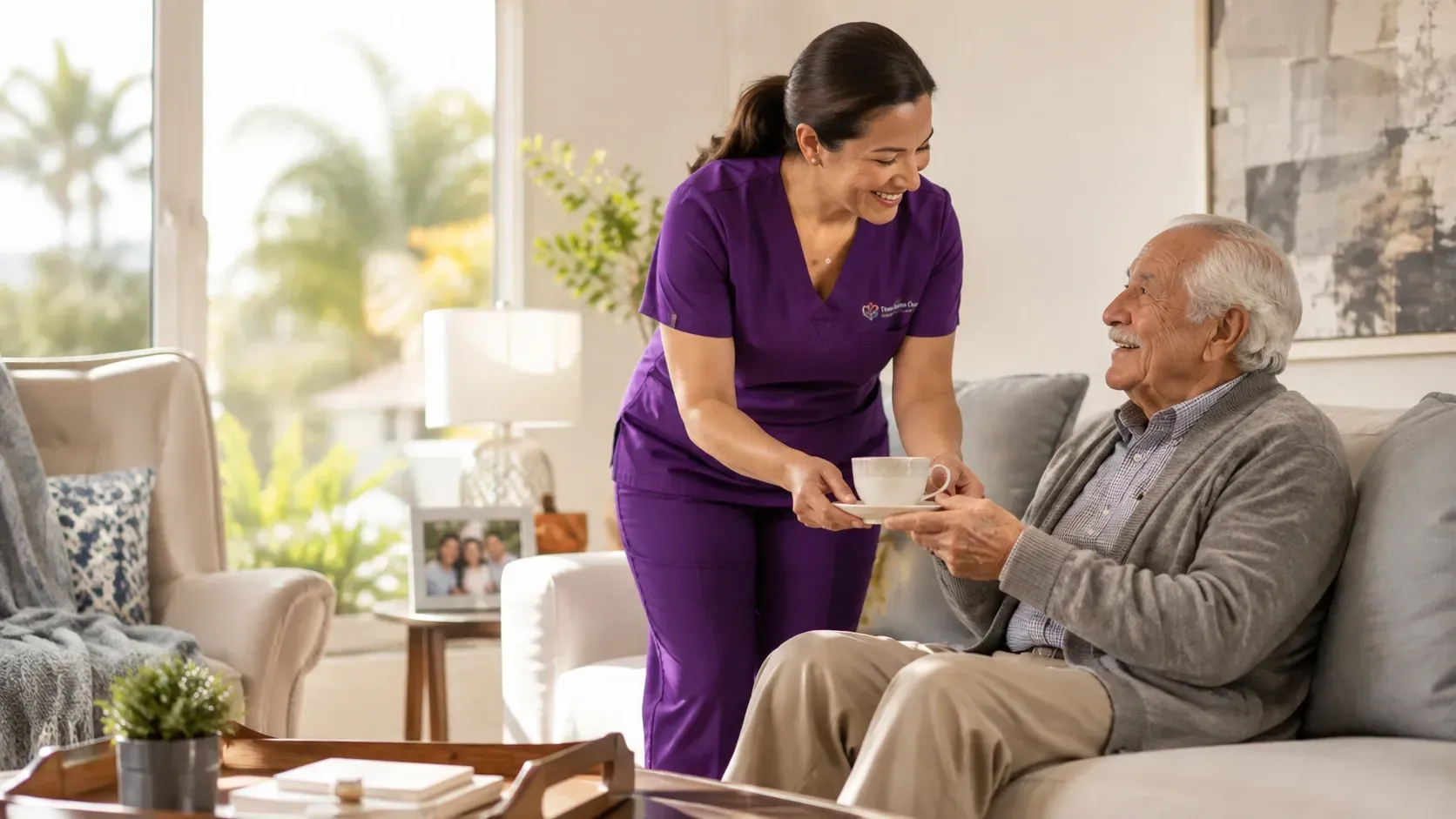
Dementia care at home is personalized, non-medical support delivered in the older adult's own residence. A caregiver helps with daily activities, offers companionship, and follows routines that make the day feel more predictable and less overwhelming.
The goal is not to take over. A good caregiver supports what the person can still do and helps with what has become difficult. Someone who can still fold laundry, set the table, or water the plants should keep doing those things. Someone who has started to struggle with bathing or meal preparation can receive help with those tasks.
It also helps to be clear about what home care is not. Home care is not medical treatment. Diagnosis, medication decisions, and treatment come from a doctor or other healthcare professional. Home care works alongside that guidance by looking after the day-to-day experience: comfort, safety, routine, and connection.
Dementia vs. Alzheimer's: Understanding the Difference
People often use the two words interchangeably, but they are not the same thing.
Dementia is an umbrella term for changes in memory, thinking, communication, judgment, and everyday functioning that interfere with daily life. Alzheimer's disease is the most common cause of dementia, but it is not the only one. Other types include vascular dementia, Lewy body dementia, and frontotemporal dementia, and some people have more than one type at once.
The type of dementia matters for medical care, and a doctor can explain a diagnosis and what to expect.For day-to-day support, families looking for Alzheimer’s care at home are usually looking for the same practical thing: dependable, patient help with daily life. A caregiver works with the person’s current abilities, preferences, and routines, which is why care is built around the individual and not around a label.
For a more detailed overview of each type, the
Alzheimer's Association explains the different types of dementia and how they differ.
Early Signs That a Loved One May Need Support
Memory changes usually appear gradually, and families often explain them away at first. Some common signs include:
- Repeating the same questions or stories within a short time
- Missing meals or not eating regularly
- Forgetting medications or taking them inconsistently
- Getting lost on familiar routes
- Changes in hygiene, clothing, or the condition of the home
- Pulling away from friends and activities that were once enjoyable
- Increased anxiety, frustration, or confusion, especially later in the day
- Difficulty managing money, bills, or phone calls
One sign alone does not point to dementia, and many conditions can cause memory changes, so a conversation with a doctor is an important first step. If several of these signs are showing up together, it is also a good time to think about extra help at home.
How Support Changes Through Each Stage of Memory Loss
Dementia progresses differently for every person, and stages are not always clear-cut. Still, it helps families to think in general terms about how support needs tend to change. The descriptions below are general, and a doctor is the right source for guidance on a specific person's condition.

Early Stage: Supporting Independence
In the early stage, a person may be mostly independent but starting to need reminders and structure. Support often focuses on:
- Gentle reminders for appointments, meals, and medication routines
- Companionship and outings that keep the person socially engaged
- Help with errands and transportation
- Light organization of the household and daily schedule
At this stage, part-time support is often enough, and the person is often closely involved in deciding what support feels comfortable.
Middle Stage: Adding Hands-On Help
As memory loss progresses, daily tasks become harder to complete without help. A person may need assistance with personal care such as bathing, dressing, and grooming, along with meal preparation and closer supervision. Confusion, restlessness, and changes in sleep may become more noticeable.
Care at this stage often becomes more regular, with a consistent caregiver.
Later Stage: Comfort, Safety, and Dignity
In later stages, a person may need help with most daily activities and closer attention to comfort and safety. Care focuses on gentle personal care, nutrition and hydration, a calm environment, and emotional reassurance. Many families also look at longer or around-the-clock schedules at this point, which we cover in more detail below.
Advanced needs may also require coordination with medical professionals, home health, or hospice when appropriate. Two changes in particular call for professional guidance:
- Swallowing difficulties. Coughing or choking with meals or drinks, or trouble swallowing, needs assessment by a doctor or other qualified professional. Families and caregivers should not change food textures or feeding methods on their own.
- Significant mobility changes. A sharp decline in walking, standing, or transferring needs professional assessment, since the safest way to move someone may change.
Non-medical home care works alongside these professionals, not in place of them. Caregivers can help with personal care, comfort, supervision, meals, and daily routines, follow the care instructions the family and healthcare team provide, and let the family know about changes they notice. They do not provide medical treatment, skilled nursing, or hospice care. For families whose loved one is nearing the end of life, our
end-of-life home care page explains how non-medical support can complement hospice.
How Dementia Home Care Helps With Daily Life
Support is built around what each person needs, and it can include many parts of the day.
- Daily routines. Predictable routines reduce confusion. A caregiver helps keep mornings, meals, and evenings consistent from one day to the next.
- Personal care. Help with bathing, dressing, grooming, and toileting, delivered with attention to privacy and dignity.
- Meals and hydration. Meal preparation, reminders to eat and drink, and company at the table, which often encourages better eating.
- Medication reminders. Reminders that help the person follow the routine their doctor has set.
- Mobility support. Help getting up, walking safely, and moving around the home. Our fall prevention care page explains this in more detail.
- Companionship and engagement. Conversation, music, photo albums, walks, and hobbies that feel familiar and meaningful.
- Safety supervision. A caregiver who is present can notice changes and help reduce risks such as wandering or leaving the stove on.
- Light housekeeping. Keeping living spaces tidy, clear, and comfortable.
You can read more about these services on our Alzheimer’s and dementia care page, or in our broader guide to what home care services include.
Need help understanding your options?
Handling the Hardest Moments of the Day
Families often tell us that the tasks are not the hardest part. The hardest part is the difficult moments: the evening restlessness, the refusal to bathe, the third time in ten minutes the same question is asked. A few of the most common challenges, and approaches that often help, are below.
Late-Day Confusion and Restlessness
Some people with dementia become more anxious, confused, or agitated in the late afternoon or evening. This is sometimes called sundowning. Families and caregivers often find it helps to:
- Keep a steady daily schedule, with meals and rest at consistent times
- Open curtains and use good lighting before the sun sets
- Plan active or engaging things earlier in the day
- Keep evenings calm and quiet, with soft music or a familiar activity
- Limit caffeine later in the day
If evening agitation is new, worsening, or severe, mention it to the person's doctor, since changes in behavior can have medical causes.
Sudden changes need prompt medical attention.
Sudden confusion, or a marked change from the person’s usual condition, should be checked by a doctor promptly. It should not automatically be blamed on dementia progression or sundowning. Sudden confusion can be a sign of delirium, which is often caused by an illness, infection, medication problem, or another medical condition and is often treatable. The National Library of Medicine’s
MedlinePlus overview of delirium explains this in more detail. Call the person’s doctor right away, and call 911 if the person is hard to wake or you believe it is an emergency. Even first-time evening restlessness is worth mentioning to the doctor.

Wandering
Wandering can happen even in people who have never done it before, and it often has a reason, such as looking for someone, trying to "go home," or feeling restless. Helpful steps include:
- Adding simple door safety measures, such as chimes or alarms, or a latch placed out of the usual line of sight
- Providing meaningful activity and regular walks so the person's energy has somewhere to go
- Keeping an identification bracelet or a recent photo available
- Having a caregiver present during the times of day when restlessness tends to happen
Safety first: any door safety measure must keep emergency exits usable, and a person with dementia should never be locked inside the home alone. If you are unsure whether a measure is safe for your home, ask the doctor or a home safety professional.
If someone goes missing, act quickly. Check the immediate area and familiar places for no more than about 15 minutes, then call 911, tell them the person has dementia, and ask them to treat it as a vulnerable adult missing-person case. The Alzheimer’s Association’s wandering response guidance lists the steps to take, and its 24/7 Helpline is available at 1-800-272-3900.
Resistance to Bathing and Dressing
Bathing is intimate and can feel frightening or confusing for someone with dementia. Approaches that often help include:
- Choosing the time of day the person is most relaxed
- Keeping the bathroom warm and well lit
- Explaining each step in a calm voice before doing it
- Offering simple choices, such as which towel or shirt to use
- Protecting privacy by keeping the person covered as much as possible
Experienced caregivers learn what works for each individual, and families can share what has worked in the past. Nobody knows your loved one's preferences better than you do.
Repeated Questions
Answering the same question repeatedly can be exhausting. For the person asking, though, the question is new each time, and the worry behind it is real. Answer calmly and briefly, respond to the feeling as well as the words, and gently shift attention to something else, such as a snack, music, or a short walk.
Communication Tips for Families
Small changes in how we talk can make days calmer for everyone:
- Speak slowly and calmly, and use short, simple sentences.
- Make eye contact and say the person's name before you begin.
- Offer one step or one choice at a time.
- Avoid correcting or arguing. If the person is upset, acknowledge the feeling first.
- Allow extra time for responses, and avoid finishing sentences unless asked.
- Use familiar music, photographs, and objects to start conversations.
Over time, these small details become the foundation of a trusting relationship.
Making the Home Safer for Someone With Memory Loss
Homes across Los Angeles vary widely, from hillside houses with many stairs to single-level homes in the San Fernando Valley, so safety looks different from one house to the next. For someone with memory loss, a few areas deserve special attention:
- Walkways and lighting. Keep paths clear and well lit, including night lights between the bedroom and bathroom.
- The kitchen. Consider safe access to the stove, knives, and cleaning products, and keep food that is safe to eat easy to see.
- The bathroom. Non-slip mats, grab bars, and a shower seat can reduce the risk of falls.
- Doors and exits. Simple measures can help reduce the risk of wandering without making the home feel locked in, and emergency exits must always stay usable.
- Clutter and familiar items. Keep favorite chairs, photographs, and objects in their usual places. Too many changes can create confusion.
- Labels and cues. Simple signs or pictures on cabinets and doors can help someone find what they need.
For a broader checklist, see the safety section in our guide to
what to expect during a home care assessment.
Dementia Home Care vs. Residential Memory Care: What’s the Difference?
Dementia home care is support delivered in the person’s own home. The person stays where they live, and a caregiver comes to them for the hours of support they need. Residential memory care is support provided in a residential community designed for people with memory loss, where the person lives and receives care.
Neither option is right for everyone. The better fit depends on the person’s health, safety, needs, family support, finances, and preferences. Many families begin with dementia home care because familiar surroundings can feel reassuring, and then revisit the decision as needs change. A doctor or care professional can help you think through the right setting at each stage.
When Needs Increase: Longer Hours and Around-the-Clock Support
As dementia progresses, families often find that part-time help no longer covers the hardest parts of the day. This does not mean home care has stopped working. It usually means the plan needs to change.
Families often confuse three different arrangements, so it helps to understand how they differ:
- More frequent visits, such as daily support during mornings and evenings when routines are most challenging
- Overnight care, if the person is awake, restless, or at risk during the night
- Live-in care, where a caregiver stays in the home
- 24-hour care, for families who need continuous support
Talking with your care team before a crisis makes these decisions easier, because the caregiver already knows your loved one and the plan can be adjusted gradually.
Supporting Family Caregivers
Caring for someone with dementia is rewarding and demanding at the same time, and family caregivers often put their own needs last. Exhaustion, guilt, and isolation are common. Many people feel that asking for help means they are failing, when asking for help is often what allows a family to keep going.
Support at home can give relatives time to rest, work, attend their own appointments, or spend time with other family members without worrying that their loved one is alone. Respite care is designed for exactly this purpose, and it can be occasional or ongoing.
Some practical ways to protect your own well-being:
- Ask for help early, before exhaustion sets in
- Share tasks with other relatives and be specific about what they can do
- Keep your own medical appointments and routines
- Set aside regular time away from caregiving, even if it is short
- Reach out to friends, family, or a support group for people caring for someone with dementia
Families who take care of themselves are better able to take care of their loved ones.

Questions to Ask About Dementia Care
Every agency should be able to talk comfortably about memory loss. When you speak with a provider, consider asking:
- How do caregivers learn about my loved one's history, preferences, and routines?
- What does a caregiver do when my loved one becomes confused or upset?
- Will my loved one see the same caregiver regularly?
- How does the plan change as needs change?
- How will the agency keep our family updated?
- What happens if a caregiver is unavailable?
For help comparing providers more generally, see our guides on
how to choose the right home care agency in Los Angeles and
what to verify before choosing a caregiver.
How True Amore Supports Families Living With Dementia
Here is how those questions apply to True Amore Home Care LLC:
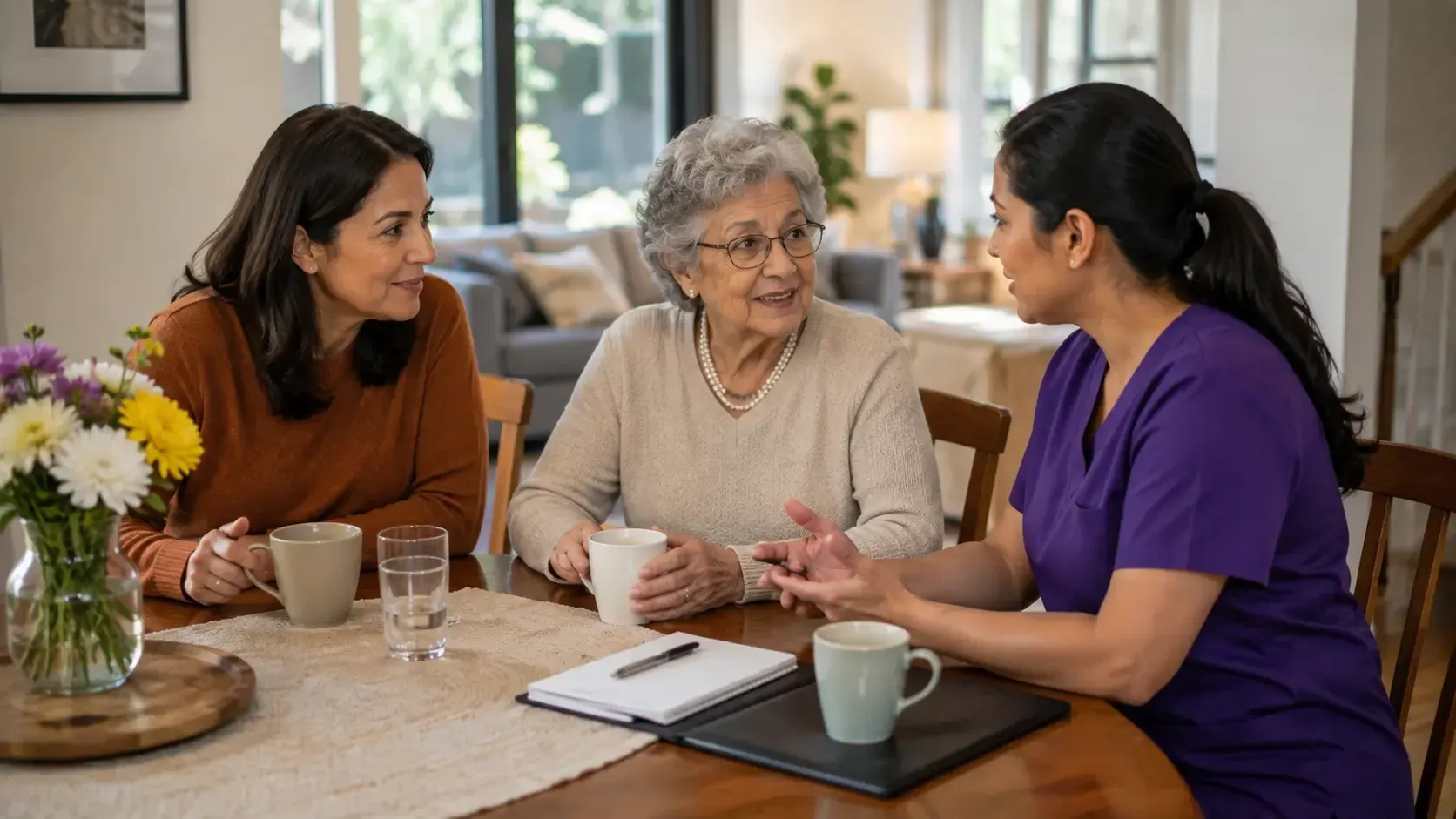
- Learning the person’s history, preferences, and routines. We take time to understand your loved one’s personality, preferences, and daily habits before creating a personalized care plan, starting with the care assessment. Family members are invited to share life stories, routines, and what has and hasn’t worked.
- Caregiver matching. We aim to pair each client with a caregiver who fits their needs and personality
- Dementia training and experience. Our caregivers are selected for patience and compassion and are prepared to support communication changes and behaviors related to memory loss.
- Communication with families. We keep families informed and involved in their loved one’s care.
- Care plan reviews. The care plan is reviewed and adjusted as needs change.
- Backup coverage. If a regular caregiver is unavailable, our team works to arrange another caregiver and keeps the family informed. Availability depends on scheduling and caregiver availability at that time.
Planning for the Cost of Dementia Care
Families in Los Angeles often ask about cost early on, and it is a reasonable question. Costs depend on the hours of care, the type of support, and how needs change over time. Our guide on how much home care costs in Los Angeles explains the factors that affect pricing.
Some families also explore long-term care insurance or veterans home care benefits, depending on their situation. Because eligibility varies, it is worth asking about these early so you understand your options.
Medicare GUIDE Program
Families caring for someone with dementia may also look into the Medicare GUIDE Program, which offers caregiver support and, for eligible participants, potential respite benefits.
- Who it serves. GUIDE serves eligible individuals with dementia who are enrolled in Medicare Parts A and B. People enrolled in Medicare Advantage are not eligible.
- How to enroll. Enrollment is through a participating GUIDE provider.
- What it may include. Care coordination, caregiver education and support, and, for eligible participants, respite services. Respite services are subject to eligibility and program limits.
Under our partner arrangement, True Amore Home Care works with participating GUIDE providers to help eligible families access in-home respite and support. True Amore does not determine eligibility or enroll families in GUIDE. Those steps are handled by Medicare and the participating GUIDE provider. Learn more on our
Medicare GUIDE Program in California page, or see the
CMS GUIDE Model frequently asked questions.
Getting Started With Dementia Home Care
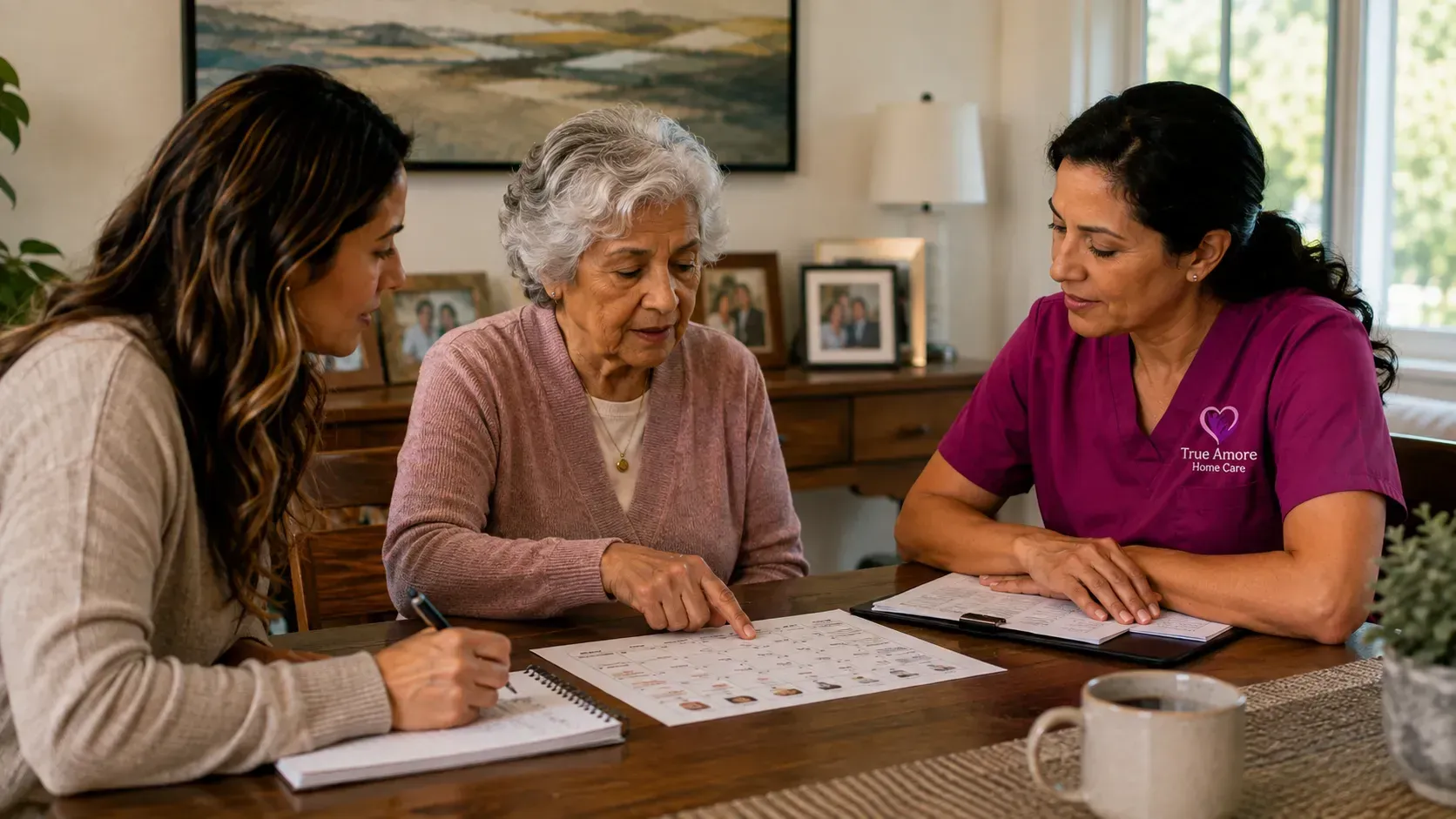
You do not need to have every answer before you reach out. The first step is usually a conversation. During an assessment, the care team learns about your loved one's routines, personality, concerns, and preferences, and you can ask questions about proposed support, caregiver matching, and scheduling.
Some families begin with part-time care to see how it feels, and others need more support right away. Either approach is fine, and the plan can be adjusted as you learn what helps most.
Frequently Asked Questions
1. What is dementia care at home?
Dementia care at home is non-medical support provided in the person's own residence. Caregivers help with daily activities, personal care, meals, medication reminders, companionship, and safety supervision, based on each person's needs and routines.
2. Can someone with dementia stay at home?
Many people can, with the right support. The right arrangement depends on safety, health, and how much help is needed, and it can change over time. A doctor and the family can review it together.
3. What services are included in Alzheimer’s home care?
Alzheimer’s home care typically includes help with personal care, mobility, meals, medication reminders, companionship, daily routines, and light housekeeping, along with activities that help reduce confusion and support emotional well-being. It is non-medical support, and medical care comes from a doctor or other healthcare professional.
4. How is dementia home care different from residential memory care?
Dementia home care is support delivered in the person’s own home, with a caregiver coming to them for the hours of support they need. Residential memory care is support provided in a residential community designed for people with memory loss, where the person lives and receives care. The better fit depends on the person’s health, safety, needs, family support, finances, and preferences, and a doctor or care professional can help families decide.
5. Is dementia home care a medical service?
No. Home care focuses on non-medical daily support. Medical care comes from a doctor or other healthcare professional.
6. When should we start looking for support?
There is no single right moment. Many families reach out when daily routines become harder to manage, when safety becomes a concern, or when family caregivers feel stretched thin. Starting earlier often gives everyone more time to adjust.
7. Can we adjust the care schedule later?
Yes. Needs change with dementia, and the care plan can be reviewed and adjusted over time, options range from part-time visits to longer or around-the-clock support.
8.How can family members stay involved?
Families can share routines and preferences, stay in regular communication with the care team, and be as involved as they wish. Home care is meant to work alongside the family, not replace it.
True Amore Home Care LLC serves families across Los Angeles and Ventura counties, with a focus on the San Fernando Valley and the Conejo Valley. Our caregivers support older adults living with memory loss in places such as Woodland Hills, Northridge, Calabasas, Westlake Village, Agoura Hills, and Thousand Oaks. Location can affect scheduling and caregiver availability, so please share your home address and preferred schedule when you reach out.
Not sure how much help your parents need?
True Amore Home Care offers personalized care assessments for families throughout Los Angeles County and the Conejo Valley.
About the Author
Shamim Kalanda, CSA
Administrator and Owner, True Amore Home Care LLC
Shamim Kalanda, CSA, is the Administrator and Owner of True Amore Home Care LLC. She helps families assess care needs and arrange personalized nonmedical home care for older adults. True Amore Home Care LLC is a California licensed Home Care Organization, HCO No. 194701217.
Recent Posts






 Talk to a Care Expert